Showing posts with label The Time Machine. Show all posts

August 31, 2018

Misia - Another Red-headed Muse - Part Three


Photo of Misia by Vuillard, 1897Misia by Renoir 1904

In 1907 Misia’s marriage to Alfred Edwards was in tatters. Misia was extremely jealous of her husband's mistress Genevieve Lantelme, and said in her memoirs "I had contrived to get a photograph of Lantelme; it adorned my dressing-table, and I made desperate efforts to look like her, dress my hair in the same way, wear the same clothes."

Genevieve Lantelme
Genevieve Lantelme and Edwards married but in 1911 Lantelme drowned after falling off Edwards’ yactht.

Around 1909 Misia began an affair with the lusty Spanish Painter José Maria Sert; she married him in 1920. Sert’s murals achieved international recognition. His work adorns the assembly hall of the League of Nations, the Waldorf-Astoria in New York and his mural at the Rockefeller Center replaced the one painted by Diego Rivera which was dismantled after Rockefeller objected to its subject matter.


José Maria Sert
Sert had been working at the Ballets Russes painting sets and creating the dancer's costumes. He was a colourful, fiery man with enough money to keep Misia in the style to which she had been accustomed. They decorated their apartment on the Rue de Rivoli in an unorthodox but staggeringly grand way. Massive pieces of rock crystal were placed in front of the fire to refract light. Tables were made of tortoiseshell or the semi-precious malachite.
Mural by Sert, Rockefeller Center
In the meantime thanks to Serge Diaghilev and his Ballets Russes, Misia’s drawing-room on the Rue de Rivoli became home away from home for the Russians. She opened her door to him while he broadened her horizons. When Igor Stravinsky first played the score of Le Sacre du Printemps to Diaghilev, the event inevitably took place in Misia’s apartment.
Serge Diaghilev
Misia loved José Sert, saying she was the only man who truly “satisfied” her. But Misia had a way of attracting younger, prettier women into her circle who threatened to steal her man. This time Roussy Mdivani was the thief.

Roussy managed to crawl into the Sert’s bedroom the last time José made love to Misia. Misia didn't hold a grudge, "The poor girl was not responsible for the feeling she had for you." she wrote Sert. "I found it very natural that she should adore you."

Misia was weirdly fond and protective of Roussy Mdivani, inviting her everywhere and tending to her health. All three were taking drugs; Sert had always used cocaine, Misia was finding release in morphine, Roussy was willing to try anything. The triangle lasted for as long as Misia’s pride allowed. They divorced in 1927.

In Misia’s circle between the wars, fashion steadily got the edge on art. In 1916 Misia met Coco Chanel who was to become her closest female friend. Apparently Misia, although morphine-addicted, created bonsai-like table-top trees out of rock-crystal and semi-precious stones. It’s uncertain if she made the trees herself but she certainly designed them. She designed dresses for a New York City fashion house around the same time.

When Sert finally cut ties with Misia, she consoled herself with the company of Coco Chanel, who was to now assume the dominant role in Misia’s life. Jean Cocteau dramatized their friendship in Les Monstres Sacrés but apparently he really never understood their relationship.

After Roussy’s early death, José Sert moved back in with Misia. During World War II Misia did her best to save artist Max Jacob’s life, She tried to pull every string to save him from the Nazis.
At her post-war soirées she invited collaborators and résistants on different days, but if they happened to bump into each other by chance she left them to sort it out. Her close friend Coco was arrested for a short time, suspected of being a Nazi collaborator.

Misia lived until 1950. She survives only in the works of others.

photo of Lantelme found at http://elgrillo.web-log.nl/el_grillo/paris/index.html
top photo of Misia by Vuillard found at the great website http://www.aloj.us.es/galba/monograficos/LOFOTOGRAFICO/POSTIMPRESIONISTAS/Fotos_Vuillard1.htm

Misia - Another Red-headed Muse - Part One

Portrait of Misia - Henri-Toulouse Lautrec

I had never heard of Misia until G-Pup bought me the book Misia, The Life of Misia Sert, by Arthur Gold and Robert Fizdale, second hand.

It turns out that Misia is one of the most inspirational muses and patrons of the Parisian avant-garde. Artists, musicians, writers and dancers at the turn of the (last) century were beguiled by her. A beauty in her time, Misia was painted by Toulouse-Lautrec, by Bonnard and Vuillard, and according to her memoirs, 7 or 8 times by Renoir.

She’s another in my series of red-headed muses and this gingersnap of a woman seemed to have her finger in all pies.

Misia Godebska, was born in 1872 in Russia. Her mother died in childbirth. Her father, the sculptor Cyprien Godebska, was engaged in the reconstruction of the Tsar’s palace. Remarried, he sent her off to live with family. She had a few idyllic years living with her grandmother in Belgium where she was found be a gifted pianist, only to be reunited with her distant father and step-mother in Paris. There Misia grew up in amongst the upper crust of French society, but she was shunted off to a succession of boarding schools and family members.

Henri Toulouse-Lautrec

She married early, at the age of 16, to Thadée Natanson, a Polish ex-pat politician and journalist. Later he became the editor of the Paris arts magazine la Revue Blanche, focusing on the circle of the Paris avant-garde.

La Revue Blanche was published from 1891 to 1902. One had to know Misia before being published in the magazine and in turn, Misia only wanted to know those who were gifted. She knew almost everyone who mattered in Paris’s artistic circles. Her taste was original and discerning. Probably a true bohemian, she was unwilling to desert her money and her class.

The painters (Vuillard, Bonnard, Lautrec and Renoir) painted her and the composers debuted their masterpieces at her piano. Ravel and Debussy were frequent guests. Vuillard adored her. Stéphane Mallarmé wrote poetry for her.

Photo by Édouard Vuillard

Although I don’t find her particularly striking, the painters thought her looks miraculous, with a legendary pair of legs and a dreamy bosom. Colette revolved around this group too, sporting a waistline almost as small as Misia’s.


At a party of 300, thrown by Misia’s brother-in-law to celebrate the completion of nine large panels painted by Vuillard, Toulouse-Lautrec was the barman.

Misia ate up her husband Thadée’s money; as a patron she required plenty of material items. With the help of Thadée and his money she was able to entertain at their homes in the country as well. At one of these country parties, Misia caught the eye of the vulgar newspaper baron Alfred Edwards, editor of Le Matin.

Thadée Natanson was facing bankruptcy. Edwards bailed him out, on condition that he surrender his wife. Thadée and la Revue Blanche were saved and Misia was the price...

More to follow.

Misia - Another Red-headed Muse - Part Two

Pierre Bonnard
Pierre Bonnard
Edouard Vuillard

In 1900 Misia was a voluptous 28 years old. The Paris Exposition was on. Misia was about to lose her good friend Toulouse-Lautrec. Her husband, Thadée Natanson, began taking more of an interest in politics. He found le Revue Blanche boring and entered into new and not-so-lucrative ventures. And the newspaper magnate Alfred Edwards fanatically pursued Misia like Pépé le Pew pursued the little black and white cat.

Photo of Misia and Thadée by Edouard Vuillard

Misia was offended and a little afraid of the extremely boorish, powerful Edwards. Misia’s husband found her attitude childish and urged her to use her charm to secure financial backing from him.

His plan backfired. Alfred Edwards did in fact help ease Thadée Natanson's financial woes, but Edwards was so obsessed with Misia that having her as a mistress was not enough. He wanted her as his wife. The fact that he already had a wife didn’t seem to matter.

Alfred Edwards

Once again Thadée had bungled his affairs. He resigned himself to the situation between Edwards and his wife and cabled Misia to “arrange everything.” Misia now saw Thadée as a tarnished knight - Edwards as the dragon. Perhaps by marrying the dragon she would no longer need protection. Misia began to feel “the agitation which strongly resembles love”. She began living with Alfred Edwards in 1903 and married him a few years later.

Misia acquired new friends in the Parisian musical and artistic circles. She was a confidante of Pablo Picasso and Jean Cocteau and an early and devoted patron of Sergei Diaghilev's Ballets Russes. She was an inspiration to Proust and Apollinaire.

Maurice Ravel dedicated "Le Cygne" to her. When Ravel failed for the third time to win the Prix de Rome, Misia used her new husband’s clout to make the director of the Conservatoire resign. Gabriel Fauré, Misia’s childhood piano teacher took over the postion.

Misia played the piano for Caruso while he sang Neapolitan songs, and told him to pipe down when she’s had enough.

Misia was a close friend of designer Coco Chanel. Coco said "Misia never read a book"; however, she was always surrounded by people who were pure culture.”

Many of her friends from the old days stayed close and at least one grew even closer. Renoir didn’t pick sides. He was a deeply moral man and approved of Misia’s gift for bringing life alive.

Renoir longed to paint Misia’s famous breasts naked, but she would never bare them, probably because Edwards was lurking jealously despite the fact that Renoir was badly crippled with arthritis. Misia once rewarded Renoir for a portrait by giving him a blank cheque. He filled it out with the going rate. Apparently Renoir wrote love letters to her, but on the advice of her literary agent, deeming them as “too silly”, Misia destroyed them before her death.

Misia by Renoir

Misia lost Edwards to the gorgeous actress Genevieve Lantelme. As the break-up took a long time Misia was able to continue enjoying a large income. In the early stages of the breakup she headed for the coast to get away from it all. Marcel Proust was on hand to observe that Misia had ended up sharing a stretch of beach with her husband and his new mistress and her ex-husband Thadée.

More to come. (including a third husband)

May 30, 2016

Georges Melies - The Inspiration for Hugo

Scene from Hugo, Paramount Pictures
 I first posted this story 2 years ago. I've just returned from seeing Martin Scorsese's Hugo and I hadn't realized that the film was so closely tied with the story of the real Georges Méliès. Here's a synopsis of Méliès life. Please enjoy the accompanying films. 
Many of us have seen a clip of the ancient film where the poor Man in the Moon gets smacked in the face by a rocket. Georges Méliès, born in Paris in 1861 is responsible for that early film and as a film maker Méliès was the first to utilize cinema's potential to tell magical stories.


Méliès was an illusionist by trade. Before making films he was a stage magician at the Theatre Robert-Houdin (how wonderful).

In 1895, after seeing a demonstration of the Lumière brothers' camera, he became interested in film. Two years later he established his own studio.

From his rooftop property in Montreuil, Méliès directed 531 films ranging from 1 minute in length to 40 minutes. These early films are similar to the magic tricks that Méliès had been performing on stage featuring disappearing objects or people. Despite this, Georges Méliès revolutionized early cinema. Although many of Méliès’s early films were devoid of plot, his special effects and storyboards became fundamental aspects of filmmaking. His films were even pirated!

He wrote, directed and acted in nearly all of his films. His most widely-known film is 1902’s A Trip to the Moon (Le voyage dans la Lune) includes the celebrated scene mentioned above in which the rocket-ship hits the Man in the Moon.

However, Méliès, the poor guy, could not compete with the larger studios like Pathé (who eventually bought him out) and he spent his last years selling toys in a boutique in Paris’s Montparnasse train station.

Méliès did not grasp the value of his films, and he allowed most of his film stock to be melted down into boot heels during World War I. Many of his films were recycled into new film and as a result much of his legacy does not exist today. Luckily, a copy of Méliès's 1899 short film Cleopatra, believed to be lost, was discovered in Paris in 2005.

The importance of his work was recognized in the years prior to his death. In 1932 the Cinema Society gave Méliès a home in Château d'Orly where he died in 1938.
Please enjoy these Méliès videos found on Youtube.
(vozdh)

(thedisko)

Georges Méliès - The Inspiration for HUGO

Scene from Hugo, Paramount Pictures
 I first posted this story 2 years ago. I've just returned from seeing Martin Scorsese's Hugo and I hadn't realized that the film was so closely tied with the story of the real Georges Méliès. Here's a synopsis of Méliès life. Please enjoy the accompanying films. 
Many of us have seen a clip of the ancient film where the poor Man in the Moon gets smacked in the face by a rocket. Georges Méliès, born in Paris in 1861 is responsible for that early film and as a film maker Méliès was the first to utilize cinema's potential to tell magical stories.


Méliès was an illusionist by trade. Before making films he was a stage magician at the Theatre Robert-Houdin (how wonderful).

In 1895, after seeing a demonstration of the Lumière brothers' camera, he became interested in film. Two years later he established his own studio.

From his rooftop property in Montreuil, Méliès directed 531 films ranging from 1 minute in length to 40 minutes. These early films are similar to the magic tricks that Méliès had been performing on stage featuring disappearing objects or people. Despite this, Georges Méliès revolutionized early cinema. Although many of Méliès’s early films were devoid of plot, his special effects and storyboards became fundamental aspects of filmmaking. His films were even pirated!

He wrote, directed and acted in nearly all of his films. His most widely-known film is 1902’s A Trip to the Moon (Le voyage dans la Lune) includes the celebrated scene mentioned above in which the rocket-ship hits the Man in the Moon.

However, Méliès, the poor guy, could not compete with the larger studios like Pathé (who eventually bought him out) and he spent his last years selling toys in a boutique in Paris’s Montparnasse train station.

Méliès did not grasp the value of his films, and he allowed most of his film stock to be melted down into boot heels during World War I. Many of his films were recycled into new film and as a result much of his legacy does not exist today. Luckily, a copy of Méliès's 1899 short film Cleopatra, believed to be lost, was discovered in Paris in 2005.

The importance of his work was recognized in the years prior to his death. In 1932 the Cinema Society gave Méliès a home in Château d'Orly where he died in 1938.
Please enjoy these Méliès videos found on Youtube.
(vozdh)

(thedisko)

January 14, 2014

The Monuments Men

I originally posted this on Sept 3, 2009. I see that the book is about to hit the big screen with some big talent. Can't wait. It really IS time I read the book. I've had it on my bedside table for 3 years!


Now here’s a book I have to read.

Here's the true story of the Monuments Men (and women).

The Monuments Men: Allied Heroes, Nazi Thieves, and the Greatest Treasure Hunt in History by Robert M Edsel.

The “Monuments Men” were a group of approximately 345 men and women from thirteen Allied nations who comprised the Monuments, Fine Arts, and Archives section during World War II. Founded in 1943 this group of Allies was established to assist in the protection and restitution of cultural property in war areas during and following World War II. As the war came to a close, they worked to locate and return works of art and other items of cultural importance which had been stolen by the Nazis.

Countless monuments, churches, and works of art were saved or protected by the dedicated personnel of the MFAA section. Frequently entering liberated towns ahead of ground troops, Monuments Men worked quickly to assess damage and make temporary repairs to paintings, frescoes, sculpture and statuary, before moving on through conquered Nazi territory with the Allied Armies.

In the last year of the war, they tracked, located, and returned more than 5 million artistic and cultural items stolen by Hitler and the Nazis.

Many of the groups personnel were museum directors, curators, art historians, and educators and went on to have prolific careers in institutions such as the National Gallery of Art and the Metropolitan Museum of Art, as well as in museums and other institutions in Europe.

Beginning in late March 1945, Allied forces began discovering hidden repositories in what would become the “greatest treasure hunt in history.” In Germany alone, U.S forces found approximately 1,500 repositories of art and cultural objects. While many of these caches of priceless treasures had been looted by Adolf Hitler and the Nazis, others had been legitimately evacuated from German museums for safekeeping. Monuments Men oversaw the safeguarding, cataloguing and removal of all works from these repositories, regardless of their origin. The Monuments Men remained in Europe for up to six years following the conclusion of the War to oversee the complicated restitution of stolen works of art.

Here are some examples of what they found (courtesy of Wikipedia)

Berchtesgaden, Germany: The 101st Airborne Division, known as the “Screaming Eagles,” found more than 1,000 paintings and sculptures stolen by German Reichsmarshall Hermann Göring. The cache had been evacuated from his country estate, Carinhall, and moved to Berchtesgaden in April 1945 to protect it from the invading Russians.

Bernterode, Germany: Americans found four coffins containing the remains of Germany’s greatest leaders, including those of Frederick the Great (Frederick II of Prussia) and Field Marshal Paul Von Hindenburg. Also found in the mine were 271 paintings, including court portraits from the Palace of Sanssouci in Potsdam, which had been hidden behind a locked door and a brick wall nearly five feet thick. The site was originally used as an ammunition and military supply complex manned by hundreds of slave laborers.

Merkers, Germany: The Kaiserode mine at Merkers was discovered by the U.S. 3rd Army under General George S. Patton in April 1945. Reichsbank gold, along with 400 paintings from the Berlin museums and numerous other crates of treasures were also discovered. More dismal discoveries included gold and personal belongings from Nazi concentration camp victims.

Neuschwanstein Castle: Over 6,000 items including ERR (Einsatzstab Reichsleiter Rosenberg, Alfred Rosenberg’s task force organized for the “legalized” looting of Jews) documents, furniture, jewelry, paintings and other belongings stolen by the ERR from private collectors in France were found here. Monuments Man Capt. James Rorimer oversaw the repository’s evacuation.

Altaussee, Austria: This extensive complex of salt mines served as a huge repository for art stolen by the Nazis, but it also contained holdings from Austrian collections. More than 6,500 paintings alone were discovered at Alt Aussee. The contents included: Belgian-owned treasures such as Michelangelo’s Madonna of Bruges stolen from the Church of Our Lady in Bruges, and Jan van Eyck’s Ghent Altarpiece stolen from Saint Bavo Cathedral in Ghent; Vermeer’s The Astronomer and The Artist’s Studio which were to be focal points of Hitler’s Führer Museum in Linz, Austria; and paintings from the Capodimonte Museum in Naples that had been stolen by the Hermann Göring Tank Division (Fallschirm-Panzer Division 1 Hermann Göring) at Monte Cassino.

San Leonardo, Italy: In the jail cell of this very northern town, Allied officials discovered paintings from the Uffizi that had been hurriedly unloaded by retreating German troops. Among the masterpieces were paintings by Sandro Botticelli, Filippo Lippi and Giovanni Bellini.

There’s a John Frankenheimer movie starring Burt Lancaster movie called The Train in which a German colonel loads a train with French art treasures to send to Germany. The Resistance (mainly Lancaster) must stop it without damaging the cargo. It’s pretty thrilling and different from the usual war movies made in the 60s.

Speaking of 60s war movies, the clip above promoting Robert M. Edsel’s book The Monuments Men: Allied Heroes, Nazi Thieves, and the Greatest Treasure Hunt in History, features the rousing theme music from the film Where Eagles Dare. A real eye-opener, I must say, first thing in the morning.

Here's more information about the Monuments Men
http://www.monumentsmenfoundation.org/about/

Where I sit and write right now, a few blocks north of Lake Ontario, I am enduring Toronto’s annual air show. It sounds as if we are under attack. Mon Dieu!

January 7, 2014

NO NO NO This is not Van Gogh.


"I myself still find photographs frightful and don’t like to have any, especially not of people whom I know and love." 
Vincent Van Gogh, to his sister Willemien, September 19, 1889.*

 Hold everything. There's something WRONG on the internet! Since I first posted this deflating article 4 years ago, this erroneous photo has shown up everywhere on the web as being a genuine photograph of Vincent Van Gogh, even Wikipedia. What is the world coming to?! In a nutshell, the photographer and the studio indicated on the bottom of this carte-de-visite is located  in SAINT-HYACINTHE, QUEBEC, CANADA. A quick Google tells me there is only one SAINT-HYACINTHE in the world, and it's not in Belgium. The 1901 Canadian Census also indicates that Victor Morin lived in Saint-Hyacinthe and worked as a photographer.


Researchers shouldn't bend the facts to fit their stories. Please pass this on. 
Here's the rest of my post from July 2009. 

While I was trying to find a photo of Van Gogh to accompany another post I happened upon this photo, supposedly of Vincent Van Gogh. It came to light about 5 years ago and was on display at the Seton Gallery at the University of New Haven in an exhibition titled Discovering Vincent van Gogh: A Forensic Study in Identification.

The man in the photograph does bear a striking resemblance to Van Gogh. The information found on the 4 1/2" X 5 1/2", photograph circa 1886, identifies the photographer as Victor Morin, 42 RUE ST. FRANCOIS, ST HYACINTHE.

The photograph was discovered in the early 1990s by a customer flipping through an album of photographs, mostly of clergymen, dating back to the late 19th century at an antique dealer's in Massachusetts. The man who found the picture saw the resemblance to Vincent Van Gogh and took the photograph to a photo historian who had previously worked on identifying images of Abraham Lincoln and Ulysses Grant. The expert was convinced it was Vincent, contesting the veracity of earlier known photos of Vincent, believing them to be his brother instead.

Tests were performed on the photograph by a forensic institute also in New Haven. Investigators matched the size of the forehead, the shape of the eyes and even individual hairs.They too believed this to be Van Gogh stating, "Even the most minute detail matched up, even the smallest hairs on the beards matched up,"

The Van Gogh Museum in Amsterdam has contested that the picture is the artist. And rightly so.  I’d really like this to be a photo of Vincent Van Gogh – my stomach flipped when I saw it. I love Van Gogh, his letters and his myth. But alas, it’s just wishful thinking. Despite Van Gogh’s hard life, the subject of the photo looks older than the 33 years Vincent would be in the photo. But the quickest Google verifies the photographer Morin as being located in St. Hyacinthe, Quebec, Canada. There is no other St. Hyacinthe. Not Belgium like the expert says. You just can't bend the facts. (Ancestry.com backs this up as in 1901 Victor Morin is listed as a photographer on the 1901 Canadian Census)

Considering Vincent van Gogh was hungry enough to eat paint and borrowed money constantly from his brother, I don’t think Vincent came to La Belle Province and had his photo taken.

Thanks to an article at Guardian.co.uk, The Guardian, Tuesday 24 February 2004, David Teather
*http://vangoghletters.org/vg/letters/let804/letter.html

April 23, 2013

The Lighthouse - A Toronto House History


A few years ago I wrote that I  live in a red brick Victorian row house. It’s 17 feet wide and three storeys tall. It's positioned in the middle of seven identical houses,on a regular street in a regular Toronto neighbourhood. (see previous post)

About a decade ago my friend Laurie and I pieced together the history of who lived here from 1892 to 1997 through the directories at the Toronto Reference Library. The additional help of Ancestry.com and the L.D.S. helped me create a chronological record of who lived in our house.

Through this research I knew that a family, I'll call them the Le Bruns, had lived here from 1919 until the late 1950s. I had found notebooks under the floorboards in my bedroom written by a chap named Albert Le Brun focusing exclusively on what he wanted to to with a female colleague at the nearby tire factory. The name Le Brun is also etched into a brick at the back of my house. 

Fast forward to just the other day when I should have been studying for exams, when I Googled my street number and the name Le Brun. Seconds later, I found out that the father, Joseph Le Brun, had written a 190-page memoir of his life in my house and it was to be found at the public library at the end of my street. Again my house is just an ordinary shabby-chic house in the middle of thousands of others. But somehow, the history of my house could be found at the library. 

The only thing that could make this house stand apart is that it was once the home of 13 children.

As soon as the library opened the next day, I sat down with the memoir and took copious notes. I've never been so tempted to steal a book.

In 1919 Joseph Le Brun, a French Canadian from the Penetang area bought the house. He was a translator for R.L. Lister and Massey Harris, a large farm equipment company. At the beginning of his marriage, he and his wife Anne and family moved about between Lafontaine, Ontario, Quebec City and his in-laws in Toronto's East End while the house was rented out. A crazy coincidence is that in 1988, I lived on the same east end street, this time not the same house. Swanwick Avenue is just another run-of-the mill address. I lived at 32 - seventy years earlier they lived at number 14. 

The first Le Brun child died from drinking unpasteurized milk. The remaining 13 all lived under my roof at one time. 

Paul was a bookworm. He liked to invent things and went on to invent some rocket firing equipment for the Air Force. At the end of his life in Nova Scotia, he donated his stellar cactus collection to Dalhousie. 

Alda worked at Eaton's and Simpson's. Somehow the news made it into the Toronto Star when she fell down the stairs. Olive, who married late had many jobs. She was an independent woman. Martin was in the Merchant Marine. He also rode the rails. Emma was an artist who studied in New York. Surprisingly, she drew from live nude models at Toronto's Western Tech High School! That would be unheard of now. 

Albert, who wrote the notebooks found under my floor, was mentally handicapped as I had predicted. He got kicked out of the Brighton Theatre for eating onions. He loved the movies and went twice a week for the rest of his life. 

John liked boating and swimming. He worked on the boats that ferried between Toronto and St. Catharines.

There were twins Marie Therese and Lucille. Marie Therese somehow ended up working in the Pathology department at St. Barts in London. Lucille was another accomplished artist. Her father's memoir shows a meticulously copied picture of the Sleeping Pope. This picture hung in my husband's family kitchen for years. Another strange touchstone. 

Henry loved horses. He spent his summers at a riding school at the corner of Galley and Sunnyside - that's were Garden Avenue School is now.  He took care of the horses so he could use the swimming "tank" at Sunnyside Amusement Park at the foot of Roncesvalles. 

Walter was the moody one. Probably bi-polar, he wouldn't eat Christmas dinner with family. Through the Toronto Star I found out he was in trouble with the law. He stole a car and punched a cop. He left home in the 50s and was never heard from since. The fact that he was called "chicken heart Walter" may have contributed to feelings of ill will. (I know that he went on to lead a normal, productive life in Calgary). 

Dorothy loved the song "I've Got You Under My Skin". She joined the convent at 18, but left after 15 years and became a teacher. The baby Joseph was the first LeBrun to have a bike and he was the most sentimental about this house. He became a printer and although seventeen years younger, he became the warden of his brother Albert when his father got too frail to look after him. 

The memoir was filled with lots of other interesting things, like how six of the kids were quarantined for polio in the garage for 12 days. That there were chicken pens in the backyard. That they used 100 loaves of bread over two weeks to feed every mouth. 

The 15 of them were only ever together for one meal. The age difference of the children would account for this. When Paul returned from the war he was 27 - his youngest brother was five. I have a photo of this occasion. Paul and Alda, Olive, Martin, Emma, Albert, John and the twins Marie Therese and Lucille, Henry, Walter, Joseph and Dorothy, Mom and Dad are posed in my living room in front of where the french doors dividing the living room an dining room once were. And a happy bunch of ghosts they are. 

More Googling revealed that four Le Bruns are living in the Toronto area. Another awesome coincidence, and I don't bandy that word about lightly, is that Dorothy, 78,  and I have Facebook friend in common, and that she was on the same tour of Greece that my long time childhood friend took. Dorothy and my friend are regularly at the same "pizza night" and I probably have already met her. But she will be coming by officially to the house later this Spring.

Dorothy told me the house was nicknamed "The Lighthouse". I like that. It was probably called the Lighthouse because of all the stairs and the fact that it was a beacon to the Le Brun children in the neighbourhood. I have a large framed photograph of a lighthouse at the top of the attic stairs. Just like everything else - it fits together. 


The Skinny House - A Condensed History


I've recently found out much more about my skinny house. Here's a precursor to what I'm about to write. I originally published this on May 9th 2009. 

I live in a red brick Victorian row house. It’s 17 feet wide and attached on both sides; garbage cans and lawnmowers go through the house – not around. It’s similar to the one below, but that’s not my house so don’t come knocking.

Decorated mainly in faded blue and white striped wallpaper; somebody in the ‘80s must have gone for a French provincial feel. When we first saw the house in ’97 it was imbued with a shabby-chic style. Now it’s just shabby. We haven’t had the energy to do anything with the walls.

I did find the energy to trace the house’s history. Through the Central Reference Library, Ancestry.com and the L.D.S. I was able to piece together a chronological record of who lived in our house.

Built in 1892, our house was unoccupied until 1895. The theory bandied about was that the builders, who were brothers, each wanted one of the seven in our row for family members. They ran out of money and my house was purchased by a man called Feagan.

Born in 1853, Feagan worked in a grocer’s downtown owned by Solomon Moyer. He married the grocer’s daughter Susan. They had children Stewart, Susie and a little girl called Harper who died before they moved into this address.

Shortly after moving in Feagan went into partnership with a fellow grocery clerk from Moyer’s called Stipe. Together Feagan & Stipe ran a grocery wholesale close to Toronto’s docks. They could be found in the Toronto City Directory under “Fruiterers” and sounding very much like a firm found in Charles Dickens.

After about 10 years the Feagans left and a succession of owners ensued. Many of them worked for the Toronto Electric Rail Company.

During World War 1 two elderly single sisters lived here. In a subsequent Directory entry an equally old Italian neighbour a few doors down had moved in. By the next year he had married one of the cousins.

In 1919 a Frenchman bought the house – a translator for a large farm implement company. But he and his brood did not move in until much later. They stayed until 1959.

Puzzled about the ductwork in my house, one day I pulled the cast iron cover off the cold air return on my bedroom floor. I immediately spied a note, “Victoria was here, 1994”, lying under the floor boards – a message from the previous tenant of the room.

Curiosity piqued, I didn’t have far to look before I found 3 notebooks dating from the 40s and 50s, a toy block, a box for a gyroscope ( the gyroscope itself still
remains out of reach to this day) and some crumpled up Vargas girl illustrations. These belonged to the Frenchman’s son Albert.

Albert was old enough to know better. He had commandeered his sister’s music scribblers and between the lines written his copious erotic fantasies regarding a married woman called Ruby Reilly. At first I thought I had found a confession but it was just Albert's wishful thinking. Albert’s writing was so repetitive I couldn’t be bothered to read all of what he and Ruby would do when she was ‘Barenakit” It was all very procedural and much like the scene in The Shining - All Work and No Play… But I learned that Ruby had apparently flashed him at a nearby rubber tire factory where they both worked.

I guess he stored his writings under the floor and forgot about them when it was time to move on. Albert still lives in the city.

Over time, my friend and I got a shopvac and brooms and tried to reach the other things under my floor but to no avail. However I did name my next cat Ruby Reilly. She was a horrible wild thing.

December 15, 2012

The Clever Pup's Guide to Making Christmas Work - Read - A Child's Christmas in Wales


photo by Myfanwe: virtualtourist.com
I'm repeating myself yet again, but it's worth it. Here's Dylan Thomas', A Child's Christmas in Wales. It makes me nostalgic for something I've never experienced. Reading it is a delight but we have an old snap, crackle and pop vinyl recording of Thomas himself that we listen to with friends every Christmas. Please check out the links if you need definitions. Click the youtube link at the bottom of the poem if you'd like to read along. Enjoy!
bbc.co.uk
One Christmas was so much like another, in those years around the sea-town corner now and out of all sound except the distant speaking of the voices I sometimes hear a moment before sleep, that I can never remember whether it snowed for six days and six nights when I was twelve or whether it snowed for twelve days and twelve nights when I was six.

All the Christmases roll down toward the two-tongued sea, like a cold and headlong moon bundling down the sky that was our street; and they stop at the rim of the ice-edged fish-freezing waves, and I plunge my hands in the snow and bring out whatever I can find. In goes my hand into that wool-white bell-tongued ball of holidays resting at the rim of the carol-singing sea, and out come Mrs. Prothero and the firemen.

It was on the afternoon of the Christmas Eve, and I was in Mrs. Prothero's garden, waiting for cats, with her son Jim. It was snowing. It was always snowing at Christmas. December, in my memory, is white as Lapland, though there were no reindeers. But there were cats. Patient, cold and callous, our hands wrapped in socks, we waited to snowball the cats. Sleek and long as jaguars and horrible-whiskered, spitting and snarling, they would slink and sidle over the white back-garden walls, and the lynx-eyed hunters, Jim and I, fur-capped and moccasined trappers from Hudson Bay, off Mumbles Road, would hurl our deadly snowballs at the green of their eyes. The wise cats never appeared.

We were so still, Eskimo-footed arctic marksmen in the muffling silence of the eternal snows - eternal, ever since Wednesday - that we never heard Mrs. Prothero's first cry from her igloo at the bottom of the garden. Or, if we heard it at all, it was, to us, like the far-off challenge of our enemy and prey, the neighbor's polar cat. But soon the voice grew louder.

"Fire!" cried Mrs. Prothero, and she beat the dinner-gong.

And we ran down the garden, with the snowballs in our arms, toward the house; and smoke, indeed, was pouring out of the dining-room, and the gong was bombilating, and Mrs. Prothero was announcing ruin like a town crier in Pompeii. This was better than all the cats in Wales standing on the wall in a row. We bounded into the house, laden with snowballs, and stopped at the open door of the smoke-filled room.

Something was burning all right; perhaps it was Mr. Prothero, who always slept there after midday dinner with a newspaper over his face. But he was standing in the middle of the room, saying, "A fine Christmas!" and smacking at the smoke with a slipper.

"Call the fire brigade," cried Mrs. Prothero as she beat the gong.
"There won't be there," said Mr. Prothero, "it's Christmas."
There was no fire to be seen, only clouds of smoke and Mr. Prothero standing in the middle of them, waving his slipper as though he were conducting.
"Do something," he said. And we threw all our snowballs into the smoke - I think we missed Mr. Prothero - and ran out of the house to the telephone box.
"Let's call the police as well," Jim said. "And the ambulance." "And Ernie Jenkins, he likes fires."

But we only called the fire brigade, and soon the fire engine came and three tall men in helmets brought a hose into the house and Mr. Prothero got out just in time before they turned it on. Nobody could have had a noisier Christmas Eve. And when the firemen turned off the hose and were standing in the wet, smoky room, Jim's Aunt, Miss. Prothero, came downstairs and peered in at them. Jim and I waited, very quietly, to hear what she would say to them. She said the right thing, always. She looked at the three tall firemen in their shining helmets, standing among the smoke and cinders and dissolving snowballs, and she said,

"Would you like anything to read?"

Years and years ago, when I was a boy, when there were wolves in Wales, and birds the color of red-flannel petticoats whisked past the harp-shaped hills, when we sang and wallowed all night and day in caves that smelt like Sunday afternoons in damp front farmhouse parlors, and we chased, with the jawbones of deacons, the English and the bears, before the motor car, before the wheel, before the duchess-faced horse, when we rode the daft and happy hills bareback, it snowed and it snowed. But here a small boy says: "It snowed last year, too. I made a snowman and my brother knocked it down and I knocked my brother down and then we had tea."

"But that was not the same snow," I say. "Our snow was not only shaken from white wash buckets down the sky, it came shawling out of the ground and swam and drifted out of the arms and hands and bodies of the trees; snow grew overnight on the roofs of the houses like a pure and grandfather moss, minutely -ivied the walls and settled on the postman, opening the gate, like a dumb, numb thunder-storm of white, torn Christmas cards."

"Were there postmen then, too?"
"With sprinkling eyes and wind-cherried noses, on spread, frozen feet they crunched up to the doors and mittened on them manfully. But all that the children could hear was a ringing of bells."
"You mean that the postman went rat-a-tat-tat and the doors rang?"
"I mean that the bells the children could hear were inside them."
"I only hear thunder sometimes, never bells."
"There were church bells, too."
"Inside them?"
"No, no, no, in the bat-black, snow-white belfries, tugged by bishops and storks. And they rang their tidings over the bandaged town, over the frozen foam of the powder and ice-cream hills, over the crackling sea. It seemed that all the churches boomed for joy under my window; and the weathercocks crew for Christmas, on our fence."

"Get back to the postmen"
"They were just ordinary postmen, found of walking and dogs and Christmas and the snow. They knocked on the doors with blue knuckles ...."
"Ours has got a black knocker...."
"And then they stood on the white Welcome mat in the little, drifted porches and huffed and puffed, making ghosts with their breath, and jogged from foot to foot like small boys wanting to go out."
"And then the presents?"
"And then the Presents, after the Christmas box. And the cold postman, with a rose on his button-nose, tingled down the tea-tray-slithered run of the chilly glinting hill. He went in his ice-bound boots like a man on fishmonger's slabs.
"He wagged his bag like a frozen camel's hump, dizzily turned the corner on one foot, and, by God, he was gone."

"Get back to the Presents."
"There were the Useful Presents: engulfing mufflers of the old coach days, and mittens made for giant sloths; zebra scarfs of a substance like silky gum that could be tug-o'-warred down to the galoshes; blinding tam-o'-shanters like patchwork tea cozies and bunny-suited busbies and balaclavas for victims of head-shrinking tribes; from aunts who always wore wool next to the skin there were mustached and rasping vests that made you wonder why the aunts had any skin left at all; and once I had a little crocheted nose bag from an aunt now, alas, no longer whinnying with us. And pictureless books in which small boys, though warned with quotations not to, would skate on Farmer Giles' pond and did and drowned; and books that told me everything about the wasp, except why."

Go on - the Useless Presents."
"Bags of moist and many-colored jelly babies and a folded flag and a false nose and a tram-conductor's cap and a machine that punched tickets and rang a bell; never a catapult; once, by mistake that no one could explain, a little hatchet; and a celluloid duck that made, when you pressed it, a most unducklike sound, a mewing moo that an ambitious cat might make who wished to be a cow; and a painting book in which I could make the grass, the trees, the sea and the animals any colour I pleased, and still the dazzling sky-blue sheep are grazing in the red field under the rainbow-billed and pea-green birds. Hardboileds, toffee, fudge and allsorts, crunches, cracknels, humbugs, glaciers, marzipan, and butterwelsh for the Welsh. And troops of bright tin soldiers who, if they could not fight, could always run. And Snakes-and-Families and Happy Ladders. And Easy Hobbi-Games for Little Engineers, complete with instructions. Oh, easy for Leonardo! And a whistle to make the dogs bark to wake up the old man next door to make him beat on the wall with his stick to shake our picture off the wall. And a packet of cigarettes: you put one in your mouth and you stood at the corner of the street and you waited for hours, in vain, for an old lady to scold you for smoking a cigarette, and then with a smirk you ate it. And then it was breakfast under the balloons."

"Were there Uncles like in our house?"
"There are always Uncles at Christmas. The same Uncles. And on Christmas morning, with dog-disturbing whistle and sugar fags, I would scour the swatched town for the news of the little world, and find always a dead bird by the Post Office or by the white deserted swings; perhaps a robin, all but one of his fires out. Men and women wading or scooping back from chapel, with taproom noses and wind-bussed cheeks, all albinos, huddles their stiff black jarring feathers against the irreligious snow. Mistletoe hung from the gas brackets in all the front parlors; there was sherry and walnuts and bottled beer and crackers by the dessertspoons; and cats in their fur-abouts watched the fires; and the high-heaped fire spat, all ready for the chestnuts and the mulling pokers. Some few large men sat in the front parlors, without their collars, Uncles almost certainly, trying their new cigars, holding them out judiciously at arms' length, returning them to their mouths, coughing, then holding them out again as though waiting for the explosion; and some few small aunts, not wanted in the kitchen, nor anywhere else for that matter, sat on the very edge of their chairs, poised and brittle, afraid to break, like faded cups and saucers."

Not many those mornings trod the piling streets: an old man always, fawn-bowlered, yellow-gloved and, at this time of year, with spats of snow, would take his constitutional to the white bowling green and back, as he would take it wet or fire on Christmas Day or Doomsday; sometimes two hale young men, with big pipes blazing, no overcoats and wind blown scarfs, would trudge, unspeaking, down to the forlorn sea, to work up an appetite, to blow away the fumes, who knows, to walk into the waves until nothing of them was left but the two furling smoke clouds of their inextinguishable briars. Then I would be slap-dashing home, the gravy smell of the dinners of others, the bird smell, the brandy, the pudding and mince, coiling up to my nostrils, when out of a snow-clogged side lane would come a boy the spit of myself, with a pink-tipped cigarette and the violet past of a black eye, cocky as a bullfinch, leering all to himself.

I hated him on sight and sound, and would be about to put my dog whistle to my lips and blow him off the face of Christmas when suddenly he, with a violet wink, put his whistle to his lips and blew so stridently, so high, so exquisitely loud, that gobbling faces, their cheeks bulged with goose, would press against their tinsled windows, the whole length of the white echoing street. For dinner we had turkey and blazing pudding, and after dinner the Uncles sat in front of the fire, loosened all buttons, put their large moist hands over their watch chains, groaned a little and slept. Mothers, aunts and sisters scuttled to and fro, bearing tureens. Auntie Bessie, who had already been frightened, twice, by a clock-work mouse, whimpered at the sideboard and had some elderberry wine. The dog was sick. Auntie Dosie had to have three aspirins, but Auntie Hannah, who liked port, stood in the middle of the snowbound back yard, singing like a big-bosomed thrush. I would blow up balloons to see how big they would blow up to; and, when they burst, which they all did, the Uncles jumped and rumbled. In the rich and heavy afternoon, the Uncles breathing like dolphins and the snow descending, I would sit among festoons and Chinese lanterns and nibble dates and try to make a model man-o'-war, following the Instructions for Little Engineers, and produce what might be mistaken for a sea-going tramcar.

Or I would go out, my bright new boots squeaking, into the white world, on to the seaward hill, to call on Jim and Dan and Jack and to pad through the still streets, leaving huge footprints on the hidden pavements.
"I bet people will think there's been hippos."
"What would you do if you saw a hippo coming down our street?"
"I'd go like this, bang! I'd throw him over the railings and roll him down the hill and then I'd tickle him under the ear and he'd wag his tail."
"What would you do if you saw two hippos?"

Iron-flanked and bellowing he-hippos clanked and battered through the scudding snow toward us as we passed Mr. Daniel's house.
"Let's post Mr. Daniel a snow-ball through his letter box."
"Let's write things in the snow."
"Let's write, 'Mr. Daniel looks like a spaniel' all over his lawn."
Or we walked on the white shore. "Can the fishes see it's snowing?"

The silent one-clouded heavens drifted on to the sea. Now we were snow-blind travelers lost on the north hills, and vast dewlapped dogs, with flasks round their necks, ambled and shambled up to us, baying "Excelsior." We returned home through the poor streets where only a few children fumbled with bare red fingers in the wheel-rutted snow and cat-called after us, their voices fading away, as we trudged uphill, into the cries of the dock birds and the hooting of ships out in the whirling bay. And then, at tea the recovered Uncles would be jolly; and the ice cake loomed in the center of the table like a marble grave. Auntie Hannah laced her tea with rum, because it was only once a year.

Bring out the tall tales now that we told by the fire as the gaslight bubbled like a diver. Ghosts whooed like owls in the long nights when I dared not look over my shoulder; animals lurked in the cubbyhole under the stairs and the gas meter ticked. And I remember that we went singing carols once, when there wasn't the shaving of a moon to light the flying streets. At the end of a long road was a drive that led to a large house, and we stumbled up the darkness of the drive that night, each one of us afraid, each one holding a stone in his hand in case, and all of us too brave to say a word. The wind through the trees made noises as of old and unpleasant and maybe webfooted men wheezing in caves. We reached the black bulk of the house. "What shall we give them? Hark the Herald?" "No," Jack said, "Good King Wencelas. I'll count three." One, two three, and we began to sing, our voices high and seemingly distant in the snow-felted darkness round the house that was occupied by nobody we knew. We stood close together, near the dark door. Good King Wencelas looked out On the Feast of Stephen ... And then a small, dry voice, like the voice of someone who has not spoken for a long time, joined our singing: a small, dry, eggshell voice from the other side of the door: a small dry voice through the keyhole. And when we stopped running we were outside our house; the front room was lovely; balloons floated under the hot-water-bottle-gulping gas; everything was good again and shone over the town.
"Perhaps it was a ghost," Jim said. "
Perhaps it was trolls," Dan said, who was always reading.
"Let's go in and see if there's any jelly left," Jack said. And we did that.

Always on Christmas night there was music. An uncle played the fiddle, a cousin sang "Cherry Ripe," and another uncle sang "Drake's Drum." It was very warm in the little house. Auntie Hannah, who had got on to the parsnip wine, sang a song about Bleeding Hearts and Death, and then another in which she said her heart was like a Bird's Nest; and then everybody laughed again; and then I went to bed. Looking through my bedroom window, out into the moonlight and the unending smoke-colored snow, I could see the lights in the windows of all the other houses on our hill and hear the music rising from them up the long, steady falling night. I turned the gas down, I got into bed. I said some words to the close and holy darkness, and then I slept

December 14, 2012

The Clever Pup's Guide to Making Christmas Work - Enjoy.... A Real Tree.

copyright Hazel Smith
Ten days to go and if you haven't already bought your tree, make sure to get  a real one.  I always enjoy a real tree. It makes Christmas work for me and the preparations just make me a little more mindful. Oh, and the smell when you come down to breakfast the next day! Sure, you have to water it and you get needles all over the place but it's worth the fuss. 
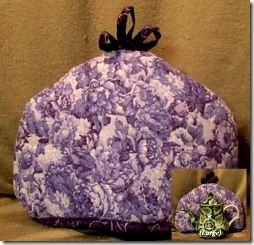
I always want to purchase the tree a little earlier, but I think we will wait until my son gets home form university. Because we are lucky urbanites we are used to having a tree-seller on the next block.  After dinner, (it always happens at night) the three of us put on our worst coats - because there's always sap - and  visit the hatchet-faced Polish twins who set up around the corner. They've seen us for fifteen years but now they are missing. This year we will have to visit the Chinese grocery on the next block or the chic florists on the way.   I get to pick and it seems we always come home with a balsam, about 7 feet tall. The fellows carry it home lengthwise between them.
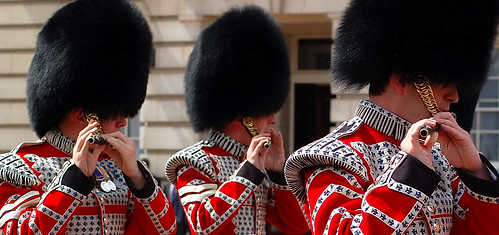
We let it settle for a bit and then I have a freak-out about how fast time is racing by. Didn't I just do this? Seriously, I just did this 3 months ago? Didn't I?

Lights go on first. Then Vince Guaraldi's A Charlie Brown Christmas goes on the turntable And, then, let the decorating begin.