Showing posts with label Interesting Spaces. Show all posts

April 23, 2013

The Lighthouse - A Toronto House History


A few years ago I wrote that I  live in a red brick Victorian row house. It’s 17 feet wide and three storeys tall. It's positioned in the middle of seven identical houses,on a regular street in a regular Toronto neighbourhood. (see previous post)

About a decade ago my friend Laurie and I pieced together the history of who lived here from 1892 to 1997 through the directories at the Toronto Reference Library. The additional help of Ancestry.com and the L.D.S. helped me create a chronological record of who lived in our house.

Through this research I knew that a family, I'll call them the Le Bruns, had lived here from 1919 until the late 1950s. I had found notebooks under the floorboards in my bedroom written by a chap named Albert Le Brun focusing exclusively on what he wanted to to with a female colleague at the nearby tire factory. The name Le Brun is also etched into a brick at the back of my house. 

Fast forward to just the other day when I should have been studying for exams, when I Googled my street number and the name Le Brun. Seconds later, I found out that the father, Joseph Le Brun, had written a 190-page memoir of his life in my house and it was to be found at the public library at the end of my street. Again my house is just an ordinary shabby-chic house in the middle of thousands of others. But somehow, the history of my house could be found at the library. 

The only thing that could make this house stand apart is that it was once the home of 13 children.

As soon as the library opened the next day, I sat down with the memoir and took copious notes. I've never been so tempted to steal a book.

In 1919 Joseph Le Brun, a French Canadian from the Penetang area bought the house. He was a translator for R.L. Lister and Massey Harris, a large farm equipment company. At the beginning of his marriage, he and his wife Anne and family moved about between Lafontaine, Ontario, Quebec City and his in-laws in Toronto's East End while the house was rented out. A crazy coincidence is that in 1988, I lived on the same east end street, this time not the same house. Swanwick Avenue is just another run-of-the mill address. I lived at 32 - seventy years earlier they lived at number 14. 

The first Le Brun child died from drinking unpasteurized milk. The remaining 13 all lived under my roof at one time. 

Paul was a bookworm. He liked to invent things and went on to invent some rocket firing equipment for the Air Force. At the end of his life in Nova Scotia, he donated his stellar cactus collection to Dalhousie. 

Alda worked at Eaton's and Simpson's. Somehow the news made it into the Toronto Star when she fell down the stairs. Olive, who married late had many jobs. She was an independent woman. Martin was in the Merchant Marine. He also rode the rails. Emma was an artist who studied in New York. Surprisingly, she drew from live nude models at Toronto's Western Tech High School! That would be unheard of now. 

Albert, who wrote the notebooks found under my floor, was mentally handicapped as I had predicted. He got kicked out of the Brighton Theatre for eating onions. He loved the movies and went twice a week for the rest of his life. 

John liked boating and swimming. He worked on the boats that ferried between Toronto and St. Catharines.

There were twins Marie Therese and Lucille. Marie Therese somehow ended up working in the Pathology department at St. Barts in London. Lucille was another accomplished artist. Her father's memoir shows a meticulously copied picture of the Sleeping Pope. This picture hung in my husband's family kitchen for years. Another strange touchstone. 

Henry loved horses. He spent his summers at a riding school at the corner of Galley and Sunnyside - that's were Garden Avenue School is now.  He took care of the horses so he could use the swimming "tank" at Sunnyside Amusement Park at the foot of Roncesvalles. 

Walter was the moody one. Probably bi-polar, he wouldn't eat Christmas dinner with family. Through the Toronto Star I found out he was in trouble with the law. He stole a car and punched a cop. He left home in the 50s and was never heard from since. The fact that he was called "chicken heart Walter" may have contributed to feelings of ill will. (I know that he went on to lead a normal, productive life in Calgary). 

Dorothy loved the song "I've Got You Under My Skin". She joined the convent at 18, but left after 15 years and became a teacher. The baby Joseph was the first LeBrun to have a bike and he was the most sentimental about this house. He became a printer and although seventeen years younger, he became the warden of his brother Albert when his father got too frail to look after him. 

The memoir was filled with lots of other interesting things, like how six of the kids were quarantined for polio in the garage for 12 days. That there were chicken pens in the backyard. That they used 100 loaves of bread over two weeks to feed every mouth. 

The 15 of them were only ever together for one meal. The age difference of the children would account for this. When Paul returned from the war he was 27 - his youngest brother was five. I have a photo of this occasion. Paul and Alda, Olive, Martin, Emma, Albert, John and the twins Marie Therese and Lucille, Henry, Walter, Joseph and Dorothy, Mom and Dad are posed in my living room in front of where the french doors dividing the living room an dining room once were. And a happy bunch of ghosts they are. 

More Googling revealed that four Le Bruns are living in the Toronto area. Another awesome coincidence, and I don't bandy that word about lightly, is that Dorothy, 78,  and I have Facebook friend in common, and that she was on the same tour of Greece that my long time childhood friend took. Dorothy and my friend are regularly at the same "pizza night" and I probably have already met her. But she will be coming by officially to the house later this Spring.

Dorothy told me the house was nicknamed "The Lighthouse". I like that. It was probably called the Lighthouse because of all the stairs and the fact that it was a beacon to the Le Brun children in the neighbourhood. I have a large framed photograph of a lighthouse at the top of the attic stairs. Just like everything else - it fits together. 


November 25, 2012

The Clever Pup's Guide to Making Christmas Work - Get Outside - Talk a Walk

The title of these posts is a bit grandiose, but Christmas has changed in my house. My companions for the holidays are three adult males - my son, my husband and my brother. I love them to bits but Christmas is sinking into a blur of late mornings, too much beer and the Godfather trilogy. They don't even eat my baking! So for the next month I'm going to post about what I think captures the true essence of the season. So wonder as I wander. Follow me.

Dobson Trail, New Brunswick, Winter

Is your collar pulled high, hat tugged low? Get your mittens out of the chest. It's time for a winter walk. And according to the weather specialists, winter's almost here. Take a long deep breath of the cold, nose-prickling air and pack a thermos of warming hot chocolate. There are places rural and urban to walk on a winter's day. If you're out in the forest, pick a well-marked trail and maybe lay a virtual trail of bread-crumbs by marking your trail with coloured tape. My brother who is a hiker extraordinaire, decorates some of his winter walks with small ornaments or bells that he's bought at the dollar store. it's quite magical to see them there.

Peter J. Thompson/National Post
 Colonel Samuel Smith Park in Toronto's Kipling and Lakeshore area is a wonderous place to visit in any season. Extending out into Lake Ontario, it's home to a marina, a bird sanctuary, and places for a brave dog to swim. Trails through a variety of trees and plants lead to a network of paths through Humber College. It's delightful to see what the college has done with the buildings of the old Ontario Asylum, once located on the grounds of what is now Sam Smith Park. It will soon be cold enough to take advantage of the Toronto's only ice skating trail located here. Skaters can lace up in the Power House Recreation Centre. This 19th-century red brick building once piped warmth to the adjacent asylum. It is now restored with its brick smokestack cathedral celings and three-storey windows intact.

September 8, 2012

Hotel Belvedere

Wow. I finally got out of town for a night. If you're anything like me - and I think you are - I don't find the cookie-cutter uniformity of (dare I say it) American-style hotels very appealing. My husband and I stayed in the 20-room Hotel Belvedere in Kingston, Ontario in the early 90s and apart from the removal of the Georgia O'Keeffe's on walls the place is still as charming as it was over 18 years ago.

Once a fabulous hotel, it faded into obscurity as a rooming house. It was transformed back into a fabulous place again in the 80s. For the price of a room at the Holiday Inn or the Marriott or the Radisson, one can experience unique rooms decorated with antiques, wrestle with quirky showers and breakfast on the prettiest terrace this side of Italy.


  We've stayed in four rooms over the years and we've liked every one. After returning to our room at night we joked, "Shame there's no turn-down service." If you're anything like the moaners on Trip Advisor with an inflated sense of entitlement this place is not for you. But I dont't think you are.

Here's a link to their splendid place. http://www.hotelbelvedere.com/index.php plus a couple of pictures via Tripadvisor and my husband.

Top Floor, Second from the right

Where you can park your car - now where can I park these complimentary banana skins?


In the vaults there's a picture of a 29-year-old me sitting on these stairs


April 23, 2012

Desolation Row

Richelle Forsey
Straight out of a scary teen novel is the abandoned Canada Linseed Mills. Built in 1910, it's been sitting abandoned on Wabash Avenue, about a minute's walk from my house, since the late 1960s.

Despite passing here with the dog every day, I've never been inside. It's locked, fenced and barb-wired off from the public. But obviously some people have made it inside, armed with spray cans, cameras or sorry tales.

There is a strong move afoot to have it turned into a community centre as it sits next to a very active park and playing field whose clubhouse was also recently rescued from dereliction. 

Apparently it couldn't be a creepier locale. What the brochures don't tell you about this guano heaven is that one is greeted by a snapshot of a nude man tacked on the wall by the hidden entrance. There's a trough in the basement filled with 6 feet of murky, stagnant water with an ominous block and tackle pulley overhead. There's one room filled with candles. And a room containing home made sex dolls and foam rubber spray- painted with anatomical features. The pigeons shuffle and waffle overhead thinking you hear others whispering.

Some excellent photos have been taken by people braver than I. A good curator should let the pictures do the talking...

Olena Sullivan

Thomas H. Haddow

Thomas H. Haddow

Toni Wallachy

Shelly White

Richelle  Forsey

Michael Pietrocarlo

Enter 40 Wabash Toronto into Google Maps for a drive by.

July 28, 2011

Georgian Bay July 2011/Memorial Bench

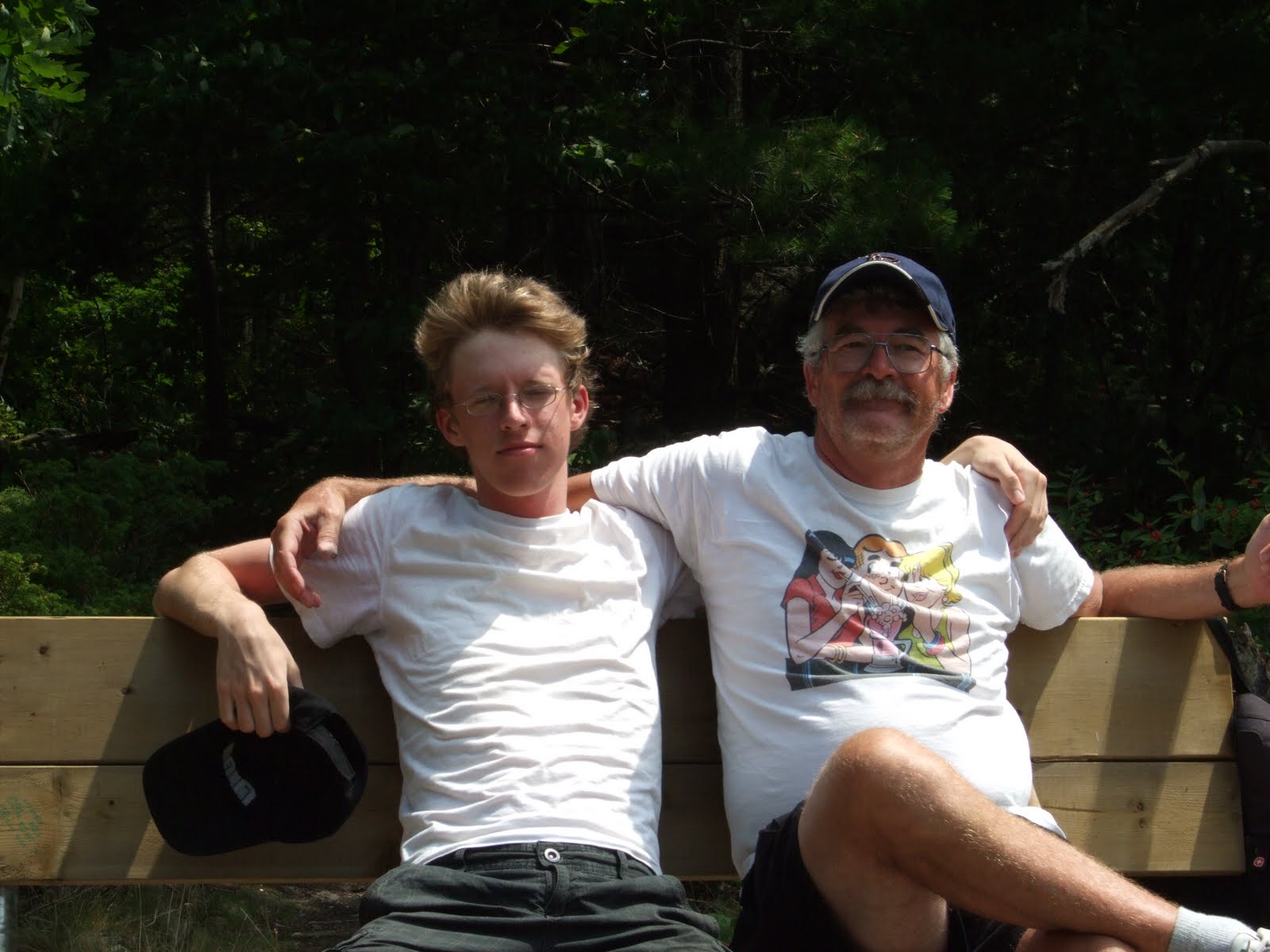
My brother Steve and I decided to dedicate a park bench to our parents Ray and Joan Smith, who died in 2007 and 2009 respectively. An old railroad track has been converted into a pleasant trail along the Parry Sound waterfront with great views over what the locals call the North Channel and of Georgian Bay. In the woods just off the path is where we arranged for the bench to go. 

Steve already has a great apartment on the hill behind the Town Beach. The location he chose for the bench is wonderful; about 200 paces from his front door. The bench is secluded and the view is amazing. My parents would have appreciated the serenity and the amazing sunsets. The drawback is that my brother, who is an avid hiker, biker and kayaker, gets sidetracked and spends too many minutes at the bench, delaying his daily physical activities.

We will soon have it painted or stained and a plaque with our parent's dates will be attached to the back. There is a little makeshift fire pit in front and I'm sure a great many beers will be consumed here after dark. Over time it will get marked up, but that's par for the course in my old home town. Here are some photos of the bench and others from my recent trip to the Parry Sound area.


April 23, 2011

Beatrix Potter's Cottage


Hilltop was one of the homes of children's author, Beatrix Potter. As requested in her will, the interior has been left as if she had just “gone out to the post" with a fire burning in the hearth, and cups and saucers at the ready for visitors. It’s a time capsule of Beatrix Potter’s full life. Every room contains a reference to a picture in a 'tale'. The lovely cottage garden is a delightful tumbledown mix of flowers, herbs, fruit and vegetables.


Beatrix Potter bought Hill Top in 1905 with the royalties from her first few books. She wrote her early books from her parents home in London, but they were inspired by her annual holiday visits to England’s Lake District.  Although almost forty, she could not stay in her beloved new home because she was expected to take care of her parents in London. She visited it whenever she could. After her marriage to William Heelis in 1913 she was able to settle in the Lake District permanently. Beatrix wrote many of her famous children's stories in the small 17th century stone house. Characters such as Tom Kitten, Samuel Whiskers and Jemima Puddleduck were created here, and the books contain many pictures based on the house and garden.


Eventually Beatrix  went on to own 15 farms and over 4,000 acres of land in the area. Beatrix loved animals and went on to be a farmer and a well-known breeder of sheep.

Hill Top
Near Sawrey, Hawkshead, Ambleside, Cumbria LA22 0LF
Telephone: 015394 36269 Fax: 015394 36811 Email: hilltop@nationaltrust.org.uk

top image: geograph.uk 
2nd image: Stephen Robson for the National Trust Properties
3rd. The World of Peter Rabbit, Frederick Warne and Co. Copyright 2002

April 2, 2011

There was a Crooked House


One of the strangest buildings in the world is the  Krzywy Domek an irregularly-shaped building in Sopot, Poland, that makes you feel as if you're passing through the hall of mirrors in a funhouse. Built in 2004 the Krzywy Domek, whose name translates into English as the "Crooked House" is 4,000 square metres in size and is part of Sopot's Rezydent shopping center.

It was designed by Szotyńscy & Zaleski who were inspired by illustrations found in  fairytales. Here's link to the site.

Photo: Broca

April 1, 2011

April Fools!

For those unfamiliar with Toronto, this truck bursting out of a wall can be found at the CTV (formerly CityTV) building 299 Queen Street West. To check it out on Google maps, it's on the left or east side of the neo-gothic building. This installation is meant to represent that CP24 is extremely anxious to deliver breaking news. Its wheels spin all the time.

Photo: copyright The Torontoist

February 10, 2011

A Jewel of A House - from Elle Decor


Giulia Geranium's human friend brought my attention to this beautiful house in Morocco.
Please click here for more

The photographer, Simon Upton...wasn't he on Doctor in the House?!

January 24, 2011

Vivienne Westwood's London


I watched the first installment of Vivienne Westwood's London on CTV on Saturday. Really, who has the TV at 7 on a Saturday? I had to rearrange my dinner schedule. Any way the show garnered a "nudity warning" and it made me wonder.

The aim of the program was to  persuade visitors to London to eschew the tourist route of Madame Tussaud's, Buckingham Palace and Big Ben/Westminster Abbey.

It was great fun as slightly-barmy Westwood dragged us around to her favourite London haunts. She showed us incredibly famous art at a couple of less well-known institutes;The Wallace Collection and the Cortauld. At the Wallace she showed us one of her favourites whose name I've forgotten. Very dark, she said, but it contained all the colours in the world. It also contained a nipple. Was this the reason for the nudity warning at every ad break. She focused on Fragonard's The Swing, and said that the joke was that the girl didn't have her knickers on. Vivienne Westwood frequently goes about without her knickers on. Is this the nudity?


Then Westwood took us to the Cortauld where she waxed poetic about Renoir's La Loge.


Other places Westwood introduced us to were an outdoor market underneath the railway arches. It reminded me very much of Toronto's St. Lawrence Market. With the aid of her former muse and model, Sarah Stockbridge, we visited notorious White Chapel and walked down Brixton's Electric Avenue.

Vivienne Westwood loves the Barbican and carried on a bit about how important live theatre is. She loves Henry the VIII's Hampton Court and the authentic kitchen. Me too. She was also intrigued by one of the historical interpreter's cod piece. That must have been the annoying nudity even though he was covered in layers of red felt.

For somebody who is known as one of the architects of  the punk movement, her being so enamoured with the past is strange. Over lunch at the Wallace Collection she said to the Globe and Mail's Elizabeth Renzetti,

"The 20th century was a mistake,” she says. “There was nothing produced in the 20th century, no ideas. There’s not one person alive who could paint one flower on that porcelain” – again, the hand flutters toward the Wallace galleries – “or anything that’s in there.”
Wow, that sort of negates punk, and grunge and the way clothing, music and art have evolved over the past 35 years. Hmm.

I never had much time for Westwood, being much too much of a flake. She has always been too outre for me. But watching this programme I grew to really like her. She had boundless energy for someone about to turn 70. She bikes all over London.  Although I was mentally combing her bright red hair through most of the show I really admired her nutty, eccentric style.

Vivienne Westwood's had a major impact on the 20th Century despite that she now says "no ideas were produced in the 20th Century."  She and her spouse of the time, Malcom McLaren made the Punk movement happen. Doc Marten owes her a debt of gratitude. Now I know that she loves good art makes me like Vivienne Westwood even more. Maybe she's one of my red-headed muses - Although with Vivienne I don't think the red hair will last.

I was able to find this video of VW at the Wallace. In this video she is actually much more subdued than the one I watched thanks to FashionTelevision.

January 19, 2011

Another Untouched French Gem


The French house untouched for 100 years


A late 19th Century town-house in central France that was sealed up for more than 100 years has finally been opened to the public in accordance with its owner's last wishes.
Louis Mantin was an aesthete and gentleman of leisure who bequeathed his opulent home to the town of Moulins on condition that a century later it be a museum.
After he died in 1905, the mansion was closed up and fell into dilapidation. Now thanks to a 3.5m euro ($4.7m; £2.9m) refit funded by local authorities, it has been returned to its original pristine state.
The result is a remarkable time-capsule, combining rich fin-de-siecle furnishings, archaeological curios, skulls and other Masonic paraphernalia, a collection of stuffed birds, as well as the latest domestic gadgets such as electricity and a flushing loo.


Outside of Maison Mantin
The house was forgotten, but not by locals

Mantin only had a few years to indulge his aesthetic fantasies. Knowing that his death was approaching, he made a will in which he made sure his treasured house would be saved.
"In the will, he says that he wants the people of Moulins in 100 years time to be able to see what was the life of a cultured gentleman of his day," said assistant curator Maud Leyoudec.
"A bachelor with no children, he was obsessed with death and the passage of time. It was his way of becoming eternal."
Some confusion surrounds the exact terms of the will.
According to local people, Mantin specifically said that the house should be locked up for a century and then opened up to the public.
However the truth is less sensational, if only slightly.
In fact, Mantin stipulated simply that in 100 years time the mansion should be a museum. He said nothing about what should happen in between.
Collective memory
The fact that the house was totally abandoned was thus not a predetermined condition - it was just what actually took place.
"The house was gradually forgotten by the world. But not by the people of Moulins," said Mantin's great-niece Isabelle de Chavagnac.
A bathroom inside Maison Mantin
As well as electricity, the house had modern bathrooms.

"Here everybody was waiting for the day when a 100 years would have passed and the house would be opened once again. It is odd how the collective memory of a place never dies."
Curiously it was Isabelle de Chavagnac - as one of Mantin's last known descendants - who played a key role in getting the house re-opened.
Under the will, the house would have reverted to her had it not been turned into a museum once the century had passed.
She had no desire to take the possession of the house. Quite the contrary, she wanted Mantin's wishes to be fulfilled.
But by threatening to exercise her right in law to take back the mansion, she forced the local authorities to act. They found the money to renovate, and the house opened at the end of 2010.
Five years late, but no-one is counting.

(thanks to John Moreau for suggesting this to me). 

November 29, 2010

Van Gogh's Bedroom

After acquiring my ticket to Van Gogh's bedroom, I was allowed up the back stairs to a darkened room in order to watch a very poignant film on Van Gogh's life in Auvers-Sur-Oise. The director-types from the lunchroom downstairs were already there. I was happy to have beat the crush of the budgies downstairs. That would have spoiled my whole experience.

The screening-room consisted of a low bench at the front and a higher bench against the wall. When I chose the lower, one of the movie-men addressed me and what little French I have enabled me to understand that they said, "Madame, this is not Truffaut. Please sit on the this banquette." I had a vague recollection of what they were on about - the puppet scene from Truffaut's The 400 Blows.

After confirming that I could only take photos of Vincent's room from the stairs, I climbed to the 3rd floor and found myself in a room of palpable sadness. A tiny caned chair focused under a skylight was the only furniture in Vincent's bedroom. The effect was one of great loneliness.

I placed myself where I thought the head of Vincent's bed would be and imagined the pain and despair he endured during the two days it took him to die. Had his little bed once made the scratches in the wall? Had he made the nail holes once upon a time by hanging one of the 70 paintings he had created while there?

The Maison de Van Gogh, which is what the museum and restaurant compound is called, is trying to acquire an original Van Gogh to hang in this room. Behind some Plexiglas is a copy of a letter Vincent wrote to Theo stating that "some day or another I believe I will find a way to have my own exhibition in a cafe".  Someday or another this room will host one of Vincent's paintings.

Next door to Vincent's room is the bed chamber of another Dutch painter who had stayed at the Auberge. He had heard Vincent's moans and cabled Theo to come at once.

Vincent died July 30, 1889 with Theo at his side.

For more information please contact the Maison de Van Gogh