Showing posts with label Theme Thursday. Show all posts

January 14, 2010

Theme Thursday - "Surfacing"


"I can't believe I'm on this road again." My sentiments exactly. Lately, when I’m heading up to my folks place on the four-lane black-top, sometimes clear, sometimes centre-bare, depending on the weather I can’t believe it either. Wasn’t I just here?


For the unnamed narrator in Margaret Atwood’s 1972 novel Surfacing, it’s a different matter – she didn’t expect to be returning ever again.


Surfacing is written from the point of view of a young woman who travels with her boyfriend and another young couple to a remote island on a lake in Northern Quebec. She spent much of her childhood there and now she’s there ostensibly looking for her missing father.


While revisiting her childhood house she comes face to face with her past. Recalling past events and emotions while trying to piece together her father’s disappearance, she finds herself sinking into a "Lost Weekend". Her history overtakes her, driving her mad and forcing her to go walkabout. She becomes “undone.”


Flooded with her memories and grief for an unborn child, the “surfacer" realizes that going home means entering another time, and she needs to come up for air. Funny, it’s never been that bad for me.

I read Surfacing years ago and I have to say it didn’t resonate with me like The Yellow Wallpaper, a short story written by Charlotte Perkins Gilman 80 years before Margaret Atwood’s Surfacing. But that will have to wait for another time.

For other Theme Thursday contributors please clink here. http://themethursday.blogspot.com/2010/01/thursday-january-14-2010-surface.html

August 20, 2009

Theme Thursday - Shadow


Jessie Wilcox-Smith

Although this poem is not my own, it has special meaning to me. As a child I had a book called Gateway to Storyland (edited by Watty Piper). It contained stories like The Gingerbread Boy, Peter Rabbit and the Three Little Kittens. My Shadow was also included. I learned to read from that book. I remember the day clearly when it all came together for me.

Here's Robert Louis Stevenson's My Shadow originally from The Child's Garden of Verses.

I have a little shadow that goes in and out with me,
And what can be the use of him is more than I can see.
He is very, very like me from the heels up to the head;
And I see him jump before me, when I jump into my bed.

The funniest thing about him is the way he likes to grow--
Not at all like proper children, which is always very slow;
For he sometimes shoots up taller like an india-rubber ball,
And he sometimes goes so little that there's none of him at all.

He hasn't got a notion of how children ought to play,
And can only make a fool of me in every sort of way.
He stays so close behind me, he's a coward you can see;
I'd think shame to stick to nursie as that shadow sticks to me!

One morning, very early, before the sun was up,
I rose and found the shining dew on every buttercup;
But my lazy little shadow, like an arrant sleepy-head,
Had stayed at home
behind me and was fast asleep in bed.

--Robert Louis Stevenson

August 12, 2009

Theme Thursday - Festival

© 2009 Festival of the Sound

The summer I was 17 the “festival” came to town. I was working at a shop at the Parry Sound Mall when a man with a dignified demeanor and a pleasantly undefinable accent came in to buy an assortment of the strange things we had on offer. Obligatory plastic pails and beach towels were purchased but also cutlery and china. I felt he was more than just a summer cottager.

As it turned out, he was. During the summer of 1979, the renowned pianist Anton Kuerti purchased a summer home just north of Parry Sound and set about organizing three concerts by exceptional Canadian musicians. Anton Kuerti has an international reputation as an outstanding musician and is one of the world’s most recorded pianists. His recordings include all of Beethoven's concertos and sonatas. At that time Kuerti and his wife, cellist Christine Bogyo, had one child, Julian. I ended up baby-sitting Julian once – I’ll never forget that he asked for change for a $10.

The response to the concerts that Kuerti had planned was enthusiastic and inspired him to launch an annual concert series. The event was christened the Festival of the Sound and with Mr. Kuerti as Artistic director, this marked the beginning of Ontario's first annual international summer classical music festival.

In 1985, James Campbell began his tenure as the Festival's second Artistic Director, a position he still holds today.

Hundreds of Canadian and international musicians have performed at the Festival of the Sound, among them: Pinchas Zukerman, Yo-Yo Ma, Denis Brott, Victor Borge, Dave Brubeck Dizzy Gillespie, George Shearing, Peter Appleyard, Moshe Hammer, Norbert Kraft and Angela Hewitt. Plus Baritone Russell Braun, the Gryphon and Beaux Arts Trios and the Elmer Iseler Singers to name a few.

As part of the annual repertoire, cruises aboard the 500 passenger Island Queen feature on-deck music from classical to Dixieland.

CBC Radio broadcasts Festival concerts yearly. TV Ontario (TVO) has filmed concerts and a joint CBC/BBC documentary was for filmed for Canadian and European audiences.

Much has changed in the 30 years since Anton Kuerti organized the first classical music concerts in the small gym at Parry Sound High School. Summer after summer, organizers had to grapple with making the gym into a concert hall, not to mention overcoming the nightly noise of the trains. Concerts were also held in people’s homes and there was a stint at St. Peter’s Parish Hall.

In 2003 the long-time dream held by the Festival of the Sound of having a concert hall of their own was realized with the opening of the new Charles W. Stockey Centre for the Performing Arts on the Parry Sound waterfront. Immediately, numbers of Festival attendants doubled.

“It’s one of the best halls in the world for un-amplified music,” said Margaret Boyd, FOTS Executive Director.


© 2009 Festival of the Sound

June 11, 2009

Theme Thursday - Swing


You get a shiver in the dark
It's raining in the park but meantime
South of the river you stop and you hold everything
A band is blowin' Dixie double four time
You feel alright when you hear that music ring

And now you step inside but you don't see too many faces
Comin' in out of the rain you hear the jazz go down
Competition in other places
Oh but the horns they blowin' that sound
Way on down south, way on down south London town

You check out Guitar George, he knows all the chords
Mind he's strictly rhythm he doesn't wanna make it cry or sing
Yes and an old guitar is all he can afford
When he gets up under the lights to play his thing

And Harry doesn't mind if he doesn't make the scene
He's got a daytime job, he's doin' alright
He can play the honky tonk like anything
Savin' it up for Friday night
With the Sultans... with the Sultans of Swing

And a crowd of young boys they're fooling around in the corner
Drunk and dressed in their best brown baggies and their platform soles
They don't give a damn about any trumpet playing band
It ain't what they call rock and roll
And the Sultans... yeah the Sultans play Creole

And then the man he steps right up to the microphone
And says at last just as the time bell rings
'Goodnight, now it's time to go home'
And he makes it fast with one more thing
'We are the Sultans... We are the Sultans of Swing'

Mark Knopfler/Vertigo Records

Please check out the other, more prompt, participants at Theme Thursday.

May 27, 2009

Theme Thursday - Suitcase

“Big...see...I, I don't want one for one night. I want something for a thousand and one nights. With plenty of room here for labels from Italy and Baghdad, Samarkand...a great big one.”

“I see, a flying carpet, huh?”

“Yeah.”

“I don't suppose you'd like this old second-hand job, would you?”

“Now you're talking…Gee whiz, I could use that as a raft in case the boat sunk. How much does this cost?

“No charge.”

“That's my trick ear, Joe. It sounded as if you said ‘no charge’.”

“That's right.”

“Well, what's my name doing on it here?”

“A little present from old man Gower. Came down and picked it out himself.”

“He did?! What do you know about that...my old boss. Isn't that nice? "

When I heard the theme for Thursday was to be "Suitcase" this scene from the movie "It's a Wonderful Life" was the first thing I thought of. George Bailey who thought that the most exciting sounds in the world were anchor chains, plane motors, and train whistles, never experienced travel; he stayed in Bedford Falls all his (wonderful) life.

One of my post labels is "The Suitcase". Click on the label "The Suitcase" below and you can see articles I've written on places I've been or places I long to go.

Please check out Theme Thursday for other participants contributions.


Script-o-rama at http://www.script-o-rama.com/movie_scripts/i/its-a-wonderful-life-script.html did the transcribing for me. Thanks.

May 20, 2009

Theme Thursday - Vacation


My dream vacation. What's yours? I have so many. But here’s just one. No siren song of Lorelei leading me to the Rhine this time. This time I have the gall to stay in France.

Since this is a dream, I don’t have to fly to get there. I wake up in Paris with the birds chirping and the curtains gently billowing into my room at the Hotel Grandes Ecoles in Paris’s 5th Arrondissement.

The air smells of fresh brewed coffee. I get up, stretch, shower and throw on a cotton sundress, maybe periwinkle blue. I don’t need comfortable shoes because it’s a dream. I have a fortifying coffee on the terrace but I shun the continental breakfast in favour of a Crêpe Marron that I buy from a nearby window.

Then I head a little west to the Cour du Commerce Saint-Andre. There I sit and review my maps. In my perfect dream-French I’ll order an espresso. Feet away is the Café Procope which claims to be the oldest operating restaurant in Paris. Aparently the guillotine was perfected just out in front. Procope’s regular visitors included Molière, Voltaire, Napoleon, Georges Sand, Victor Hugo, Oscar Wilde, Thomas Jefferson and Ben Franklin.

Colette and Picasso once lived within walking distance. I head in the right direction and gaze at their respective windows from the street. I’ve found myself on Rue Bonaparte. Look - there’s Laduree. Maybe I’ll have one of their famous macarons. Yes. A Cassis Violette. Can I afford it? Yes, it’s my dream vacation.

Back towards the hotel I pass the two cafes on the Boulevard St. Germain that were popular with the Existentialists and the Surrealists; Café De Flore and Les Deux Magots. I reflect on the on the writers and artists that must have mused on the terrace - Hemingway, Andre Breton, Sartre, but I don’t go in. I’m heading to the Musee National du Moyen Age. The National Museum of the Middle Ages has conserved the most magnificent examples of ancient textiles in the world. The Lady and the Unicorn tapestries are here.

Wandering around in the Medieval Garden outside, who do I see but the Italian Actor Sergio Castellitto. He’s not French, but it’s my dream and he finds me delightful.


He agrees to accompany me up to the bouquinistes on the Left Bank of the Seine. The antique books and prints are fun to browse through. At one of the stalls I find a first edition of a Colette that I haven’t yet read. A real deal too. Sergio and I enjoy an ice cream cone while walking along the Seine, each picking out our favourite houseboat. He’s wearing a nice summer suit and looks great.

I consent to an invitation to dinner on a Bateau Mouche. Sitting astern I enjoy the asparagus cream and the seared breast of duckling. What will I have for dessert; Crepes Suzette with Raspberry Butter or the Chocolate Mousse with the praline and Hazelnut Crisp?

The candlelight serves to enhance my enjoymnent as I sail by Notre Dame, the Louvre and the illuminated Eiffel Tower. We disembark at the Pont Saint-Michel near Shakespeare & Company. Adieu. I have to get back to my hotel. I have an early start. I'm going on a train trip. But that's for another day.

May 7, 2009

Theme Thursday - Wind


According to Bert,

“Winds in the east, mist coming in,
Like somethin' is brewin' and bout to begin.
Can't put me finger on what lies in store,
But I fear what's to happen all happened before”

And like breath of fresh air, Mary Poppins, the extraordinary English nanny, is blown by the East wind to Number Seventeen Cherry Tree Lane, and into the Banks' household to care for their children. With her parrot-headed umbrella and her magic carpet bag she introduces the children, Jane and Michael, to some wonderfully delightful people and experiences. Once she has transformed the Banks into a happy family once more, Mary puts up her umbrella and goes off with the changing wind.


“The wind stiffened, and the sky toward Providence stood revealed as possessing the density of some translucent, empurpled rock. . . . At the base of this cliff of atmosphere cumulus clouds, moments ago as innocuous as flowers afloat in a pond, had begun to boil, their edges brilliant as marble against the blackening air." And in blew Darryl Van Horne, a real horny little devil, ready to seduce the three Witches of Eastwick, Alexandra Jane and Sukie. The trio of bored, husbandless New England woman innocently conjure up a mystery man to satisfy their every desire. The wild-eyed, wild-haired and wildly rich Van Horne moves into town and he fits the bill perfectly. Although he wishes to have his evil ways with his witches and a fight between good and evil ensues, the three women have discovered almighty powers within themselves.


"The sly wind blew in from the north," narrates Vianne’s daughter Anouk, as she and her mother find themselves in the insolated and conservative French village of Lansquenet-sous-Tannes where they soon open a small chocolate shop. Vianne is treated suspiciously what with her wearing a red cloak and curvaceous clothing. She even has the nerve to defy tradition and open her chocolaterie during Lent. But her shop attracts the curious and Vianne and her tantalizing recipes mend a marriage, re-unite a grandmother and grandson, and empower a woman to leave her domineering husband. She even manages to make the uptight mayor loosen his girdle a little. "Chocolat" will do that to you. The wind changes again and Vianne and Anouk have to leave once again....or maybe this time, they'll stay.

Wind is often used as a metaphor for change. Here are three examples in which I think the change is positive.

Harris, Joanne, Chocolat, Doubleday 1999
Updike John, The Witches of Eastwick, Knopf 1984
Travers, P.L. Mary Poppins, Harper Collins, 1934

April 22, 2009

Theme Thursday - Fire


“There are betrayals in war that are childlike compared with our human betrayals during peace. The new lover enters the habits of the other. Things are smashed, revealed in a new light. This is done with nervous or tender sentences, although the heart is an organ of fire.”

“Though the heart is an organ of fire” I love that...I believe that.

When I heard that theme for Thursday was to be about fire, the first thing that popped into my head was the scene from the English Patient in which the patient’s caregiver, Hana, reads aloud from his diary.

For those who don’t know, the title character in Michael Ondaatje’s 1992 novel is not English at all, but a sort of citizen-of-the-world. He is critically burned fulfilling a final obligation to his love. Slowly, before he dies, he remembers his life and his final love affair.

The English Patient is one of my all time favourite books and films. I would recommend it to anyone.


Though not quite the same words as the book, here is the scene from the movie.

Ondaatje, Michael, The English Patient, Vintage Books, Canada, 1992

April 15, 2009

Theme Thursday - Earth


Gaia, the goddess in Greek mythology, is Mother Earth. Gaia came out of the great empty void of Chaos. From her was borne Uranus, the sky god, her equal, who was both her son and her soon-to-be husband. Without a mate she produced the mountains and Pontus, the sea.

Gaia took Uranus as her husband and their offspring included the Titans, the Cyclops and three monsters known as the Hecatonchires. Uranus was aghast at the nature of their offspring. Fearful of her husband’s great strength, Gaia hid them all within herself to protect them. Terribly uncomfortable for all, her youngest, Cronus, came to the rescue by severing the union between Gaia and Uranus with his sharp knife, ouch! thus separating the connection between the Earth and Sky.

The idea that the nurturing, fertile earth is female is widespread and has been prevalent since prehistoric times. The ever-so-tubby Venus of Willendorf is widely believed to be an “Earth Mother.” The Egyptians had their fertility goddesses as did the Sumerians. The Phoenicians had Aretsaya as their Goddess of the Earth. The Inca had Pachamama. What a name!

The Native American creation myth features a divine woman falling from the sky with no land to live on. Hurriedly, mouthful by mouthful, the beaver, the muskrat and the toad brought muddy earth up from the sea floor to create land upon the Turtle's back. The divine woman gave birth, without the aid of a man, to twin boys; one good one evil. Cain and Abel, anyone? The good one was born without fuss but the evil one decided to spring from his mother’s side causing her death.

When the woman was buried, all of the plants needed for life on earth sprang from the ground above her.

Always popular with the pagan, celebrating Mother Earth has a renewed appeal with the green movement.

Hundertwasser said, “You are a guest of Nature – behave”.
And I say, "Be nice to your Mother. She's the only one you've got."


The great picture above is from The Lost Gardens of Heligan. www.heligan.com

April 1, 2009

Theme Thursday - Ten


The Metric System was introduced in my school when I was TEN. I think it was adopted by Canada one or two years earlier but I definitely remember being introduced to it in Grade 5.

Being based on the number TEN, the metric system should be simple, but I don’t find it so. It has no meaning for me; no personality, no soul.

I guess I must have picked up the Imperial system effortlessly in the years leading up to the 5th Grade. Now it’s ingrained.

Kilometres I can handle. I’m used to temperature in Celsius but Farenheit is much more specific. Cooking – I use cups, teaspoons and pounds. Height – feet and inches. 186 cm means nothing to me. It means nothing to my son who is over 30 years younger than me. Centimetres! Are you kidding? He’s 5 foot 10.

Weight – I always weigh myself in pounds, despite the much higher result. I have an English cousin who still talks about her weight in stones. As in “I’ve lost ½ a stone”. Archaic. But no more so than tablespoons or yards.

But hey, the original definition of a metre, officially adopted by France, was 'one ten-millionth of the distance between the North pole and the Equator along the meridian of Paris'. That’s pretty crazy too.

Roger Daltry doesn’t sing “I can see for kilometres and kilometres and kilometres. Oh yeah”

100 centimetres might make a metre but 12 inches makes a Ruler.

picture lifted from www.npl.co.uk

March 25, 2009

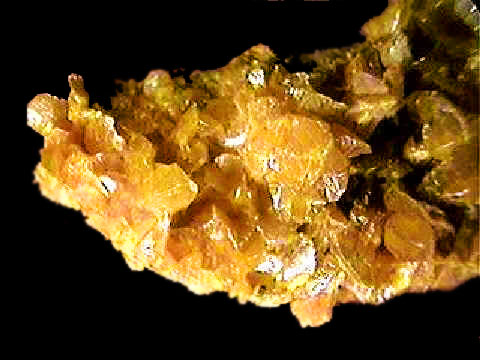
Theme Thursday - Mineral


Make Sure You Get Enough Vitamins and Cadmium Yellow

Vincent Van Gogh apparently ate paint straight from the tube and so did
Emily Carr’s monkey Woo. Maybe they were just looking to supplement their mineral intake.

Many pigments found in today’s oil or acrylic paints are synthetic or vegetable based but many are still based on minerals mined from the earth.

The making of paint was one of the earliest technologies humans developed. By using different coloured earth, or grinding soft rocks to a powder, multi-coloured images could be made. The colours found in prehistoric cave paintings come from
Red and Yellow Ochre; types of iron oxide. In Tutankhamen’s tomb, alongside the artifacts, a small paintbox was found containing powdered Gypsum, Orpiment, Hematite and Malachite.

The colour of paint is derived from the small coloured particles suspended in a carrier oil or a binder.

White pigments were made from lead which is now replaced by the less toxic zinc and titanium. The mineral
Cerussite was used to make lead paints that Queen Elizabeth I wore as a cosmetic.

Cadmium yellow is made from Cadmium Sulphide. The name Cadmium originates from the Greek kadmeia, meaning Cadmean earth which was first found near Phoenician Prince Cadmus’s city of Thebes.

Many of the blues and greens we see today are derived from copper. Malachite is a green pigment used from antiquity until the 1800s. It is essentially copper carbonate.

The name "
Cobalt blue" comes from the German Kobold; a goblin that haunts underground places such as mines. Cobalt was thought pollute other mined elements such as silver. The pigment Cobalt Blue is an oxide of cobalt made by roasting cobalt ore.

The rare gem
Lapis Lazuli has always been highly prized for its vivid blue. Lapis Lazuli is ground to make an ultramarine pigment for oil paints. Medieval artists used it for the blue in Virgin Mary's cloak.

Vermilion is a sulphide of mercury found naturally as Cinnabar. Cinnabar pigment is used in
Chinese carved laquerware.

Beautiful Manganese Blue was a favourite of fresco painters. However, it was found to be highly toxic and ingestion or inhalation could cause a nervous system disorder. It is no longer sold.

Another class of pigment consists of the earth tones, such as sienna or umber. Umber is a natural brown clay of iron and manganese oxides. When heated it becomes burnt umber

Magenta was originally called fuchsine and in 1859 it was first made from coal tar dyes. The name of the colour was soon changed to magenta, after the Battle of Magenta fought at Magenta, Lombardy-Venetia.

I think it all looks good enough to eat!

March 18, 2009

Giuseppe Arcimboldo (1527-1593)


Theme Thursday - Vegetable


Uncle Monty's Vegetable Love

MARWOOD is somewhat uncomfortable in these surroundings. In complete contrast WITHNAIL is totally at ease. Apart from the magnificent furniture the room is filled with vegetables. Cauliflowers and carrots are on every surface in valuable antique pots A silver tray on the table sprouts a dozen fully grown onions. In the bay window is an [effing] great cabbage, the size of an aspidistra. MARWOOD is staring at its luxurious foliage when UNCLE MONTY pirouettes in with the drinks.

MONTY: Do you like vegetables?
MARWOOD nods and MONTY wafts dust from the leaves of a parsnip.
I’ve always been fond of root crops, but I only started to grow last summer…

MONTY proffers glasses and WITHNAIL moves in for a “Chin chin”.
I happen to think the cauliflower more beautiful than the rose.
He moves off at speed towards a turnip in an art noveau pot.
Do you grow?
WITHNAIL: Geraniums…
News to MARWOOD. MONTY swings towards him. Exchange of smiles
MONTY: You little traitors. I think the carrot infinitely more fascinating than the geranium. The carrot has mystery. Flowers are essentially tarts. Prostitutes for the bees…


Bruce Robinson, Withnail and I, The Screenplay, 1989, Bloomsbury Publishing, London, pp. 31-32

March 11, 2009

Theme Thursday - Animal


Sorry. Wasn’t that what you wanted?


Enough of this monkey business. This theme’s been dogging me all week. Quit badgering me.

I stopped my horsing around and I beavered away on this until morning: a veritable night owl. Now I can crow about the results.

Take a gander at this list of animal similes. Go hog-wild and think of your own answers. Do any definitions apply to you? Don’t be chicken and clam up - you can’t outfox me.

Hey… hey come back!

as proud as a _____
as wise as an _____
as blind as a _____
as strong as an _____
as quiet as a_____
as slippery as an _____
as hairy as a _____
as stubborn as a_____
as sly as a _____
as weak as a _____
as busy as a _____
as slow as a _____
as fat as a _____

Do you ever get compared to an animal or told you have animal characteristics? Do you see traits in yourself?

I’m as pampered as a kitten and as curious as a cat but I’m like a dog with a bone when presented with a puzzle.

Share your animal characteristics with me. Be rude if you like. Oh, oh. Now my goose is cooked!

March 4, 2009

Theme Thursday - Glass


Sainte-Chapelle

On the Île de la Cité in the heart of Paris, just a stone’s throw away from Nôtre Dame, is Sainte-Chapelle. While smaller and less famous than Nôtre Dame, Saint-Chapelle is equally one of the most thrilling experiences in Paris. The stained glass in this chapel, set in a delicate framework of arches and buttresses, is considered to be some of the best in the world. The fifteen stained glass windows in the upper chapel – each one over 50 feet high and 14 feet wide - literally surround you from floor to ceiling with a masterpiece of colour and light.


My husband, son and I visited in the spring of 2003. This was the only venue on our trip in which we subjected to fairly tight security. The chapel itself is now surrounded by the Palais de Justice and it was quite common to hear the “wee-wah, wee-wah” of the French police cars as they drove into the adjoining grounds.

Originally built by Louis IX in the 1240s to house sacred relics brought back from the Crusades, Sainte-Chapelle is the epitome of High Gothic Architecture.

Sainte-Chapelle has two levels. The ground floor is rather dark and close. After lining up to enter, I was worried that this was all that we had come for. But the second level had the radiant, tall windows. Slender columns of blue and red camoflagued the supporting pillars that led to a vaulted ceiling of star-strewn blue, seemingly floating above the magnificent stained glass windows. The Gothic architecture of Sainte-Chapelle is a prime example of an architectural style called "Rayonnant" which strived to achieve a sense of weightlessness.

We waited without success for the noon-day sun to shine through the glass. I think it would have been miraculous. The pictures we took that day are good but not remarkable.

Two-thirds of these windows are original and represent the most complete collection of 13th century stained glass art. Although seriously damaged during the French Revolution, the windows were remarkably restored in the 1800s.
Sainte-Chapelle has been a national historic monument since 1862.

February 25, 2009

Theme Thursday - Don't Toy With Me


Hey, look!" one of them said, "there's a tin soldier. Let's send him sailing."

They made a boat out of newspaper, put the tin soldier in the middle of it, and away he went down the gutter with the two young rapscallions running beside him and clapping their hands. High heavens! How the waves splashed, and how fast the water ran down the gutter. Don't forget that it had just been raining by the bucketful. The paper boat pitched, and tossed, and sometimes it whirled about so rapidly that it made the soldier's head spin. But he stood as steady as ever. Never once flinching, he kept his eyes front, and carried his gun shoulder-high. Suddenly the boat rushed under a long plank where the gutter was boarded over. It was as dark as the soldier's own box.

"Where can I be going?" the soldier wondered. "This must be that jack-in-the box’s revenge. Ah! If only I had the little lady with me, it could be twice as dark here for all that I would care."

Out popped a great water rat who lived under the gutter plank.

"Have you a passport?" said the rat. "Hand it over."

The soldier kept quiet and held his musket tighter. On rushed the boat, and the rat came right after it, gnashing his teeth as he called to the sticks and straws:

"Halt him! Stop him! He didn't pay his toll. He hasn't shown his passport. "But the current ran stronger and stronger. The soldier could see daylight ahead where the board ended, but he also heard a roar that would frighten the bravest of us. Hold on! Right at the end of that gutter plank the water poured into the great canal. It was as dangerous to him as a waterfall would be to us.

He was so near it he could not possibly stop. The boat plunged into the whirlpool. The poor tin soldier stood as staunch as he could, and no one can say that he so much as blinked an eye. Thrice and again the boat spun around. It filled to the top - and was bound to sink. The water was up to his neck and still the boat went down, deeper, deeper, deeper, and the paper got soft and limp. Then the water rushed over his head. He thought of the pretty little dancer whom he'd never see again, and in his ears rang an old, old song:

"Farewell, farewell, O warrior brave,
Nobody can from Death thee save."

And now the paper boat broke beneath him, and the soldier sank right through. And just at that moment he was swallowed by a most enormous fish.

My how dark it was inside that fish! It was darker than under the gutter-plank and it was so cramped, but the tin soldier still was staunch. He lay there full length, soldier fashion, with musket to shoulder.

Then the fish flopped and floundered in a most unaccountable way. Finally it was perfectly still, and after a while something struck through him like a flash of lightning. The tin soldier saw daylight again, and he heard a voice say, "The Tin Soldier!" The fish had been caught, carried to market, bought, and brought to a kitchen where the cook cut him open with her big knife.

She picked the soldier up bodily between her two fingers, and carried him off upstairs. Everyone wanted to see this remarkable traveler who had traveled about in a fish's stomach, but the tin soldier took no pride in it. They put him on the table and-lo and behold, what curious things can happen in this world-there he was, back in the same room as before. He saw the same children, the same toys were on the table, and there was the same fine castle with the pretty little dancer. She still balanced on one leg, with the other raised high. She too was steadfast. That touched the soldier so deeply that he would have cried tin tears, only soldiers never cry. He looked at her, and she looked at him, and never a word was said. Just as things were going so nicely for them, one of the little boys snatched up the tin soldier and threw him into the stove. He did it for no reason at all. That jack-in-the box must have put him up to it.

The tin soldier stood there dressed in flames. He felt a terrible heat, but whether it came from the flames or from his love he didn't know. He'd lost his splendid colors, maybe from his hard journey, maybe from grief, nobody can say.
He looked at the little lady, and she looked at him, and he felt himself melting. But still he stood steadfast, with his musket held trim on his shoulder.

Then the door blew open. A puff of wind struck the dancer. She flew like a sylph, straight into the fire with the soldier, blazed up in a flash, and was gone. The tin soldier melted, all in a lump. The next day, when a servant took up the ashes she found him in the shape of a little tin heart. But of the pretty dancer nothing was left except her spangle, and it was burned as black as a coal.


Excerpt from The Steadfast Tin Soldier, A translation of Hans Christian Andersen’s "Den standhaftige Tinsoldat" by Jean Hersholt.


The above illustration by Mabel Lucie Attwell was found on http://www.blogger.com/www.surlalunefairytales.com. Thank you very much.

February 18, 2009

Theme Thursday - Library


My dad was a librarian so the word Library was probably one of the first words I knew how to say, recognize and spell.

Dad was the librarian at our small town’s Public Library. From a Dickensian upbringing in war-time England, he eventually found himself in rural Ontario, first running the Public Library from the basement of the Town Hall, then championing for a new library to be built and finally heading a library system tending to the needs of 75 district libraries and drop-off centres and 20 schools.

It was in school around 1970 when all films borrowed from the library came with a song, “It’s the latest, it’s the greatest, it’s the library.” and a 30 second clip of the library my dad fought to have built, complete with an action shot of Dad date-stamping books. Kids in the classroom would shout, “Hey, Hazel, it’s your Da-ad!”

When my mum was working, the library was sort of my afterschool babysitter. When I was about 10 I vowed to read all the Juvenile Fiction. I know I read all the Laura Ingalls Wilder, but I don’t think I went around the room alphabetically.

Fast forward 25 years and I found myself living with a man who is the Anti-Library. Whereas my dad would rarely buy a book – why would he, my spouse never uses the library. A real proponent of used bookstores he would rather buy a book and keep it. Forever. When we last counted we had 1,650 books. So I'm still surrounded by books.

Maybe in this age of belt-tightening libraries will experience a renaissance. Dad would have liked that.